
Last Asylum: Plague


5M+
Installs
37GAMES GLOBAL
Developer
-
Strategy
Category
-
Teen
Content Rating
-
https://gpassport.globallap.com/center/ServicePrivacy/customize?keyWord=privacy_laas
Privacy Policy
editor reviews
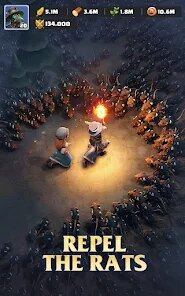
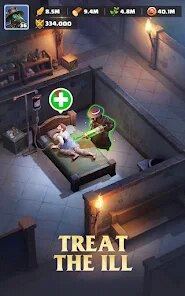
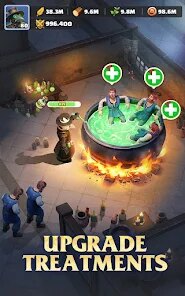
Last Asylum: Plague is a mobile survival strategy game that blends base-building, resource management, and real-time PvP combat within a post-apocalyptic plague-ridden world. The core gameplay loop revolves around scavenging for supplies, fortifying your shelter, researching technologies to cure or combat the infection, and forming alliances with other players to fend off zombie hordes and hostile factions. It falls squarely into the survival-strategy genre, but it's not just about lone-wolf scrapping — it also incorporates light MMO elements, like alliance wars and territory control, that appeal to players who enjoy social competition. This game is ideal for fans of resource-heavy strategy titles like State of Survival or Last Shelter: Survival, but also for casual gamers who appreciate a slower-paced, thoughtful progression system rather than high-speed action. I initially downloaded it after seeing a trailer that highlighted its grim, detailed art style — the overgrown ruins, flickering neon signs, and grotesque zombie designs looked more polished than the usual mobile fare. The growing buzz on gaming forums about its alliance mechanics also caught my attention, promising a deeper social experience than many competitors.
From the first hour, I was impressed by how quickly Last Asylum: Plague pulled me into its rhythm. The tutorial is lean but effective, teaching you the basics of gathering wood, metal, and food, then assigning survivors to tasks. Controls are responsive on touch — swiping to zoom in/out of your base feels natural, and unit commands in combat are simple enough to manage without frustration. However, the learning curve steepens around the mid-game, where you face a cascade of upgrades, research trees, and event-driven crises. My most memorable moment came during my first alliance siege — a coordinated attack against a rival faction's stronghold. The timing required to send troops, reinforce defenses, and time special abilities felt tense, and the real-time map updates created genuine adrenaline. One improvement I made was adjusting graphics settings to medium on my older phone, which smoothed out occasional stutter during large battles. The progression system, while rewarding, can become grindy if you don't join an active alliance — solo players may hit walls where resources take days to amass. Yet, the daily events and world bosses kept me logging back in, offering loot that felt earned rather than handed out.
I've played several titles in this crowded sub-genre — Age of Origins, Guns of Glory, and Whiteout Survival — and Last Asylum: Plague stands out for one key reason: its alliance system feels less pay-to-win than its peers. While you can buy speed-ups and premium currency, the game gives FTP (free-to-play) players meaningful ways to compete, such as through well-timed resource raids and alliance-buffed defense strategies. The world map is larger than most, with distinct biomes (abandoned cities, quarantined zones, forests) that force you to adapt your tactics. What made me stay was the community — alliances in my server organized weekly tournaments with custom rules, and the chat system was active without being cluttered by bots. However, the game struggles with performance on lower-end devices; battery drain is noticeable after an hour of play. For genre fans who want a strategic grind that rewards patience and teamwork, this is a solid choice over more monetized alternatives. It won't reinvent the wheel, but it polishes the familiar formula effectively.
features
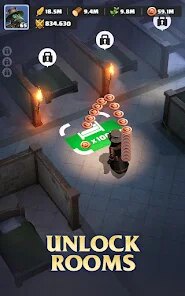
- Base Building & Defense 🛡️: You construct and upgrade structures like barracks, hospitals, and resource nodes, then place defensive turrets and walls to protect against zombie waves and player raids. The layout matters — you can reposition buildings for optimal coverage, which adds a layer of tactical planning not always seen in similar games.
- Hero Recruitment & Skills ⚔️: Unlock heroes with unique active and passive skills (e.g., a medic who heals units or a scavenger who boosts loot). You level them up via training and gear, and each hero can command squads in battles, making team composition critical for PvE and PvP.
- Alliance Warfare 🤝: Join or create an alliance to participate in structured conflicts like "capital battles" or "resource wars." Communication tools include a shared map marker system and voice chat, and success often hinges on coordinated troop movement rather than raw power, promoting genuine teamwork.
pros
- Fair Progression for Free Players 🏅: The game avoids aggressive paywalls by offering a "shelter pass" that rewards daily play, and you can earn premium currency through events and alliance achievements — not just through purchases. In my experience, I reached commander level 20 without spending a dime, thanks to diligent resource farming.
- Atmospheric World Design 🌆: The art style leans into a gritty, atmospheric aesthetic — foggy ruins, flickering streetlights, and detailed zombie models create an immersive sense of decay. Sound design complements this with ambient creaks, distant growls, and tense battle music that stays engaging during long sessions.
- Real-Time Tactical Combat 🔥: Battles aren't just numbers; you can manually activate hero skills mid-fight (e.g., airstrikes or healing waves), and unit positioning on the grid affects damage output. This adds a layer of skill that separates skilled players from those who just auto-battle, making PvP more satisfying.
cons
- Server Instability 🌩️: During peak hours or large alliance wars, the game sometimes lags or disconnects, causing lost troops or wasted speed-ups. I've lost a crucial siege because of a 5-second freeze, which feels unfair in a competitive game.
- Grind After Mid-Game ⏳: Around level 25, resource requirements skyrocket, and single building upgrades can take days without speed-ups. This forces you to either spend money or wait excessively, which can kill momentum for players who don't enjoy idle progression.
- Repetitive Event Cycles 🔄: Daily and weekly events borrow heavily from the template — “gather X resources,” “defeat Y zombies,” “win Z battles” — with little thematic variation. After two months, the events blend together, reducing the sense of novelty that initially hooked me.
Articles
![]()
How to Get Robux Safely Without Scams
![]()
How to Download Older Versions of Android Apps
![]()
How to Download Games on Google Play for the First Time
![]()
What Is an APK File for Android? Everything You Need to Know
![]()
Do Free Robux Generators Work?
![]()
Robux Pricing Guide (2026 Update): How Much Robux Really Costs
![]()
How to Avoid Scams in Roblox
![]()
Rarest Pets in Adopt Me! (2026 Update)
![]()
How to Trade Safely in Adopt Me! (So You Don't Lose Everything)
![]()
Secret Tricks Nobody Tells You in 'Steal a Brainrot'
![]()
Beginner Guide: Don't Lose Your Brainrot
![]()
How to Steal in 'Steal a Brainrot' Without Getting Caught (Or at Least Not Instantly)
![]()
Is Brookhaven RP Worth Playing? It Depends on What You’re Looking For
![]()
Why Blox Fruits Is So Popular? Here’s Why Everyone Keeps Playing It
![]()
Best Roblox Obby Games for Beginners (2026): Learn the Game Without Hitting a Wall
![]()
Top 10 Roblox Horror Games (2026): The Scariest Experiences You Can't Miss














Hot Apps
-
![]()
Uber - Request a ride
Uber Technologies, Inc.4.6

-
![]()
Snapchat
Snap Inc4.1 -
![]()
Blink Home Monitor
Immedia Semiconductor4 -
![]()
ParkMobile: Park. Pay. Go.
Parkmobile, LLC4.3 -
![]()
Signal Private Messenger
Signal Foundation4.5 -
![]()
Facebook
Meta Platforms, Inc.4 -
![]()
DeepSeek - AI Assistant
DeepSeek4.2 -
![]()
SiriusXM: Music, Sports & News
SiriusXM4.6 -
![]()
ChatOn - AI Chat Bot Assistant
AIBY Inc.4.4 -
![]()
Hulu: Stream TV shows & movies
Disney4.5 -
![]()
Sora by OpenAI
OpenAI4.7 -
![]()
PolyBuzz: Chat with AI Friends
CLOUD WHALE INTERACTIVE TECHNOLOGY LLC.3.8 -
![]()
Google Maps
Google LLC4.2 -
![]()
Uber Eats: Food Delivery
Uber Technologies, Inc.4.3 -
![]()
Instagram
Instagram4.3 -
![]()
Google Pay
Google LLC4.4 -
![]()
GroupMe
GroupMe4.5 -
![]()
Google Gemini
Google LLC4.6 -
![]()
Amazon Fire TV
Amazon Mobile LLC4.1 -
![]()
Grok
xAI4.9 -
![]()
TikTok
TikTok Pte. Ltd.4.4 -
![]()
Netflix
Netflix, Inc.3.9 -
![]()
Afterpay - Buy Now Pay Later
Afterpay3.8 -
![]()
DoorDash - Food Delivery
DoorDash4.6 -
![]()
Cash App
Block, Inc.4.5 -
![]()
Ticketmaster-Buy, Sell Tickets
Ticketmaster L.L.C.3 -
![]()
ChatBot - AI Chat
X PhotoKit4.5 -
![]()
Ford™
Ford Motor Co.4.7 -
![]()
Microsoft Copilot
Microsoft Corporation4.8 -
![]()
PayByPhone
PayByPhone Technologies Inc .4.9






























Disclaimer
1.Appinfocenter does not represent any developer, nor is it the developer of any App or game.
2.Appinfocenter provide custom reviews of Apps written by our own reviewers, and detailed information of these Apps, such as developer contacts, ratings and screenshots.
3. All trademarks, registered trademarks, brand names and company names or logos appearing on the site are the property of their respective owners.
4.Appinfocenter abides by the federal Digital Millennium Copyright Act (DMCA) by responding to notices of alleged infringement that complies with the DMCA and other applicable laws.
5.If you are the owner or copyright representative and want to delete your information, please contact us [email protected].
6.All the information on this website is strictly observed all the terms and conditions of Google Ads Advertising policies and Google Unwanted Software policy.
7.Appinfocenter.com is an independent, information-only website which is 100% free to all the users.